
the minerva press
est. april 2024
About
The Minerva Press, named after the Roman goddess of wisdom, is an online California-based youth literary magazine dedicated to championing diversity and spreading awareness about social issues. Our team strives to publish stories from artists of different races, gender identities, and cultures.We hope to help teen creatives find their voice through our publication, as submissions from creators of any experience level are welcome.Young people interested in writing, art, and photography, are encouraged to submit, and we accept works that have previously been published.
Submissions for our literary magazine are currently closed, but guidelines will be posted as soon as a new issue is announced.For collaborations, interviews, or events, reach out to us via email at [email protected].
author interviews
VOICE interviews
Ankita Jaikumar
Ankita Jaikumar discusses her poem “he’s eating the cats” in an interview with the Minerva Press. Read both the poem and her interview below.
he’s eating the catsimmigrants
the dust and tearstained tattoos
painted in photos pressing anguish into black
white.
villainized. categorized.
as inhumane.my mother asked me what I wanted to be when I grew up.
I told her a dream of blinding lights of fireworks and smoke, a vague watercolor of lifebut headlines smear ink,
quills staining my hair raven black, tearstained tattoos
playing in the dappled light of a detention center.so the eyes in the wallpaper follow me
staring through
paper warrants and red tapeto a mother dragged away
singing to a son still dreaming a border away
to a son growing up, sat up on a sunrise neither of them can see, adrift at seato a daughter forced to accept an endless land married to a man with ribboned hands and wavering mind
to a mother lost in a jungle of regret, a map no cartographer could drawwe're tasting stereotypes
—that our acceptance is our body choking down America.that the incense is just
our last vigil before we lose the only semblance
of life amongst the trees and needless fields
of the nasal sounds and song-like names as if we played dholak and carnatic instruments to the tune of the conversations we speak
of smoke and ashes swept across raging rivers of intoxicating roses and dizzying spice.tell me why
the world is built on the steps of migration and yet the same world
that finds the oldest imprint the most forgettable
1. What is the theme of “he’s eating the cats?”
The theme of “he’s eating the cats” is essentially the idea that immigration is painful. Uprooting our entire life for the chance at stability elsewhere is an unfortunate reality of the world we live in today. If the world had not been as ravaged by colonialism, genocide, racism, and economic exploitation as it has been, the world would not need to have so many of us all across the world away from our homelands. I might’ve still lived in my parent’s homeland had the job opportunities in America also existed in Pakistan. Additionally, if any readers of the poem are unaware, the title stems from when America’s current president made inflammatory and inaccurate comments on the Haitian immigrants in Springfield, Ohio. That community faced death threats after that presidential debate. Watching that occur was so dystopian, I was unable to put the words out of my head.2. You describe how immigrants are villainized and categorized. How is the portrayal of immigrants by society and by the media problematic, and what are the effects of these stereotypes?
Immigrants are scapegoated for almost everything wrong with the United States. It’s a trend we seem to be unable to shake, dating back hundreds of years. It started with Catholics and Jews trying to immigrate to the majority Protestant Christian demographic. An example related to my home state of Georgia was when colonial administrator Oglethorpe had previously banned Jews from immigrating to Georgia, but when a newer group with a doctor arrived, they were welcomed as the colony was struggling with a yellow fever epidemic. Immigrants have never been welcomed, only assessed for the contribution they may make.It morphed later into Irish and Italian immigrants, with Italians especially seen as perpetrators of crimes. And now, its Asian and Latino immigrants are the most villainized. We saw that first hand when people would push, spit, or yell slurs at Asian Americans during the Covid-19 pandemic and now with people cosplaying as ICE agents to traffic and harass Latinos. Even now, the media continues to spread rampant hatred ranging from Islamophobia, sinophobia, and much more, normalizing the pain immigrants already go through and magnifying it through hate.3. If you are comfortable sharing, how have your own experiences influenced this poem?
As someone who hasn’t always seen the myriad effects immigration has on people in America specifically, I do come from a family history that is marred by immigration. My Dada (paternal grandfather) was just a baby during the India-Pakistan split and had to stay on the Pakistani side even though he was religiously Hindu. The rest of my paternal family immigrated to India and now live in Uttar Pradesh — I’ve never met them before. This poem was mainly informed by my own family history as well as my knowledge of how child marriage, bachelor societies, and generational trauma impact families.4. The racism and xenophobia highlighted in your poem are important and unfortunately prevalent issues. Just as prevalent is the cultural diversity brought to places by immigrants. How is your own culture important to you, and how has it shaped your values?
As a South Asian, I’ve loved so much of my culture. I love the ghagras, shalwar kameez, the chicken nihari, gol gappa, dandiya sticks, and ladoos. From food to clothing, I love how diverse and beautiful my culture is. I love wearing jhumkas to school and saving mehendi designs on Pinterest for the next time I get the chance to have my hands done. I find my culture so unique. But the values it has given me are even more important. The spice in my mom’s subzis inspires me to challenge myself and never take anything for granted. The service (seva) I perform at the gurdwara is what grounds me and pushes me to understand that leadership is more than being the loudest in the room.5. My favorite lines are the ones in the final stanza: “tell me why / the world is built on the steps of migration and yet the same world that finds the oldest imprint the most forgettable.” How do modern attitudes toward immigration support your point?
We constantly devalue the Indigenous and locals of our communities. The Indigenous are barely recognized, often stripped of their rights, and yet it is their colonizers who cry outrage when immigrants come to their shores. These colonizers were migrants once and have forgotten their roots. And even worse, look at tourism. We commodify peoples’ lives and refer to them as the “locals,” expecting them to understand our language and be welcoming, when if it were them seeking asylum, we would see them as alien. This double standard is one of the many things I can never forgive about post-colonialism. We devalue the fact that they were there first while pretending that we have any right to deny immigrants on the basis of their previous nationality.Find Jaikumar here on Instagram.
Victoria Shen
Victoria Shen discusses her poem “tastes of home / taste of homes” in an interview with the Minerva Press. Read both the poem and her interview below.tastes of home / taste of homesthe gut-busting bodega is two streets down,
one hundred and seventy-six wistful treads away.
i can almost glean the ghostly presence of
you, like translucent dust sparkling
under the waning afternoon rays
as they careen towards a memory—
plastered door with its viridian roof
and burgundy window frames.it reminds me of flags, with its
mexican aisle next to the chinese food section
even though the world
doesn’t work that way.
because since when was central america
a few feet from asia?my makeshift mother points to her chilled chicken
packaged inside its coffin built from frosty,
snowflake-speckled tortilla
on the cardboard container that smells
like my third-floor attic
while it watches the winter plums blossom.on another vessel,
my standby father waves hello—
he has just returned from war and accompanies
the sound of our sheepdog’s welcome
as the aroma of a general’s chicken.they say it’s romantic,
but i think the red string of fate tied
the wrong people together
since my two countries clearly aren’t compatible
like hydrangeas and daylilies are.and yet madre’s petal caresses
bà bà’s cheek so softly,
nearly as delicately as the spring breeze
smiles upon its kumquat branches
after a couple moments’ wet shower of liquid crystals.thinking of them,
i grab both of my frozen dinner(s),
a faithful salute to both countries
yet patriotic to none.
my citizenship tips to no side on the scale;
it forever teeters on a slip of paper
that weakly squawks a CARMEN
and holding her hand from the right, a CHUNG
but these ten letters are too out of place.i wonder which shard of me i should
pledge fealty to tonight
on my midnight run,
searching for what might be a brief
taste of a home.1. What is the theme of “tastes of home / taste of homes,” and what is the significance of this title?
Major themes of this poem include identity and belonging. This title is a play on singularity and plurality (“tastes” versus “taste” ; “home” versus “homes”). “tastes of home” suggests the many sensory memories that are tied to one’s primary sanctuary. Tastes—in familiar ingredients or dishes—do not have to originate from one source. “taste of homes” flips the phrase, implying that one may have multiple homes, identities, or cultural roots.2. You describe a “mexican aisle next to the chinese food section.” Why is this blending of cultures special?
This phrase describes a seemingly mundane detail of a grocery store, but in doing so, it elucidates the many nooks and crannies that a blending of culture invests itself in—food, clothing, language, and ultimately, a community (or multiple, for that matter). Food is one of the many wonderful examples of experimentation.3. What is your favorite line from the poem? Why?
My favorite part of the poem is the first stanza: “the gut-busting bodega is two streets down, / one hundred and seventy-six wistful treads away. / i can almost glean the ghostly presence of / you, like translucent dust sparkling / under the waning afternoon rays / as they careen towards a memory— / plastered door with its viridian roof / and burgundy window frames.”While the first stanza is not the core of the poem’s theme, these descriptions capture the setting, spirit, and temperament of the piece itself: wistfulness, ghostliness, translucence. Furthermore, viridian is a major color in the Mexican flag, and red is shared by both Mexico and China.4. Have you been inspired by any people or places?
At a glance, poetry is just a mingling of words on a page. But as I look closer, I see the dead brought back to life. Homer calls to me from the lines of the Iliad, instilling in me the meaning of honor. Gilgamesh shakes his head upon hearing that I futilely seek eternal life, imploring me to revel instead in the moment.5. Why is writing a meaningful activity and/or a meaningful part of your life?
Through poetry, I am given their pure distillation of love. Similarly, I delight in transmuting all I see and feel into a kindred offering of love. I treat the universe as the punctuation and vocabulary of my poem: Each stanza is a stage of my existence, each line a moment, and each word an explanation for my thoughts and actions. Attentively, I capture my surroundings and transform them into poetic shapes and sounds: a wilting chrysanthemum imbues in me the melancholy of remembrance, urging me to find solace in sorrow; the glow of apartment lights at dusk beats to an unacknowledged rhythm, awakening the quiet camaraderie of city dwellers.Because reading the world through a poetic lens demands sensitivity, I also naturally nurture my sense of empathy to discern the aperture through which I process others’ microexpressions and minute mutterings. Since each person I encounter is unique, I marshal my emotions and logic to adapt to their needs. With a sensitive eye, I guide the placement of my em dashes and colons. When a peer asks for help resolving a misunderstanding, would they prefer that I help settle the conflict with a period, or do they want their disquiet to simmer for three ellipses and then release it to dissipate discreetly? Should I assert advice with an active verb or softly empower them with a passive one instead? I most enjoy using a linking verb to couple my heart to another’s. Conscious of others’ emotional cues, I capture them with affection and care.By memorializing our souls through acrostics, dactyls, and stanzas, we learn how to defend ourselves in times of terror and tyranny. We learn how to be brave. When most fearful, we search for nursery rhymes that have soothed us. The most innate part of our mind forages for what has comforted us as children: We rely on the rhymes’ consistent meter to quell our fastened heartbeat. We let consoling waves of alliteration and assonance guide us to dance even when the darkness blinds us, and we absorb their rhyme and tempo to embrace silence with musicality.By replacing the discordant with the lyrical, I seek to redefine adversity into grace. Having uncovered how to turn stanzas into strength and phrases into power, I will bolster my peers’ minds and buttress their creativity, rethinking our being through poetry as we contribute to a more just society.Poetry is the residue of the human spirit. Without it, our humanity will not live on.Find Shen here on Instagram.
Jashvihaa Uthayakumar
Jashvihaa Uthayakumar discusses her poem “echoes of yesterday” in an interview with the Minerva Press. Read both the poem and her interview below.echoes of yesterdayfaded photographs against frames of dust,
whispers of voices i once could trust.
the etching of time on fragile skin,
a forgotten past, yet held within.a glimpse of a light thus catching my gaze,
remembering moments lost in a haze.
the smile of a girl, on her beloved father’s lap,
the trap of memories pulling me back.a lingering touch, a shock so divine,
where once i was free, now truly confined.
my shadow fades, where could it be?
is it with those voices, crying out to me?swirls and spirals, stifling my breath,
the past creeps in, whispering death.
i cannot let it happen, cannot let it last,
these scars speak volumes, wearing a mask.an invisible string tugs on my soul,
darkness beckons, a threat to take control.
echoes surround me, filling my head,
i realize these voices come from the dead.the life i had built, a flash before my eyes–
a swift step away, leaving those echoes behind.1. What is the theme of “echoes of yesterday?”
The theme of “echoes of yesterday” circles around memories, loss, and the emotional weight of the past. It is an insight into how memories in our mind, both good and bad, linger enough to influence our future and sometimes hold us back from it as well.2. How did your personal feelings or experiences influence the content of this poem?
This poem was influenced by moments where I felt overwhelmed by my own memories and nostalgia, especially those connected to people and times that I no longer have present in my life. It is a reflection of the haunting pull those memories can have and the struggle against letting go when the emotions feel so vivid and real.3. The last stanza reads, “the life i had built, a flash before my eyes– / a swift step away, leaving those echoes behind.” What is the meaning behind these lines?
The last stanza represents a turning point, where one realizes the need to let go of the past in order to preserve themself and continue moving forward. It captures the difficult, but liberating moment when one makes their conscious decision to break free from the loophole where their past lingers on, and reclaim control of their present and future.4. As we reflect on the “echoes of yesterday,” we recall moments that are both good and bad. In your opinion, what effect do these memories have on our present selves? Is it best to keep reliving them, or to focus on the now?
Memories play a great role in shaping who we are by teaching us valuable lessons and reminding us of the love we have for others, but constantly reliving these memories can trap us in a never-ending cycle of grief. I think it is important to honour the past, but to not live in it. Focusing on the now helps us grow, heal and build new memories that are no longer defined by pain.5. Choose your favorite line(s) and explain the meaning.
My favourite lines are “the etching of time on fragile skin / a forgotten past, yet held within.” I feel as if I connect with these lines the most, because I am the type of person who usually prefers not to express my emotions out loud. While I may carry a heavy weight of memories and emotions internally, I try to remain optimistic and keep moving forward on the outside. These lines are a reminder that even when I try to forget and move on from certain moments, parts of the past still stay with me, and they continue shaping who I am, even if no one else sees it.Find Uthayakumar here on Instagram.
Maria Segovia
Maria Segovia discusses her poem “Between Your Gaze” in an interview with the Minerva Press. Read both the poem and her interview below.Between Your Gazedon’tdon't look at me like that
your eyes glazed with a layer
of ever sickening concern
within the valley of dying grass
all you see, a wounded animal
a deer in headlights, life fleeting
flashing just before themdon't make such an expression
lips curved downwards, cast aside
choosing between empathy and sadness
the air heavy between us, as you think of what to say
how thick should you sweeten your words
to try and soothe my “aching” betterdon't you dare speak nonsense
a piece of advice, a word of encouragement
what you think is comforting,
i find belittling
at the face of vulnerability,
is sorrow all you can manage to give me?open hearts, racing mind
all i hear is empty promises
if it was going to be okay,
why isn’t it already fine?
if my world is set on fire,
and you can’t kill the blaze
i'd rather you watch it burn in silence
than attempt to cool it with sewage drainso please,
if pity is all you can find to give me
i'd rather you give me nothing at all1. What is the theme of “Between Your Gaze?”
It tackles the array of complicated emotions a person who is mentally closed off feels when they have to share anything about their life. Constantly feeling that if they were to open up, all people can bring to them is pity.2. In the first stanza, the narrator is perceived as “a wounded animal / a deer in headlights” by the other party. Why did you choose this comparison?
I chose this comparison because when we think of an animal, specifically a wounded one, our first thought draws pity for them. If you see a dead animal on the sidewalk, you’re going to feel bad for them, but ultimately, there is nothing you can do to help them, and if there is, most won't be able to do much. The narrator feels as if sharing their emotions will cause them to be seen as just that, a pitiful animal who desperately needs help, but ultimately, there is nothing anyone can do to help.3. The fourth stanza asks, “if it was going to be okay, / why isn’t it already fine?” How does this question—one many can relate to—encapsulate the feelings of the narrator?
The best word to describe it is frustration. A big saying I personally have grown to dislike a lot is “everything happens for a reason.” I feel like in a lot of ways we use this to brush off or try to make way to some kind of positive mindset when something goes wrong in our lives; however, this can very well be extremely frustrating for someone who wishes they could understand: why? Why is this happening to me? What did I do to deserve it? It all ties to feeling powerless over our own lives, and how the narrator wishes there could at least be an explanation to why things go the way they go.4. Have you experienced anything similar to the situation described in your poem? If so, what was your reaction?
This poem is inspired by my own personal feelings. I personally hate opening up to people, for the same reason as the narrator: I hate feeling pitied. Whenever anyone tried to get me to talk about my feelings I just felt nauseous. I wanted to write a piece that could give a first hand perspective on the thoughts within the mind of someone that feels the same way I do, and I am extremely happy with how it turned out.5. The final lines read, “if pity is all you can find to give me / i'd rather you give me nothing at all.” In your opinion or experience, how can pity be more harmful than ignorance?
Pity in itself is not a completely negative thing. It is normal for a person to feel bad for someone else when they come with the knowledge that something bad has happened in their life. In and of itself, feeling that way is not wrong, but for a lot of people–myself included–it feels wrong. With ignorance at least, you don’t have the knowledge over your head that when you look at someone, you know that person is going through a rough patch in life, and in effect, it can give that person some peace of mind knowing at least they are carrying their own burdens alone. Feeling like someone is pitying you can make you feel emotionally and mentally weak, and knowing someone has that information about you can feel like choking on air.Find Segovia here on Instagram.
Juliet Mabasa
Juliet Mabasa discusses her poem “I Sit and Look out (with apologies to Walt Whitman)” in an interview with the Minerva Press. Read both the poem and her interview below.I Sit and Look out (with apologies to Walt Whitman)I sit and look out upon the shades of the world, blending together yet so distinct;I see crimson red, the colour of blood spilled amongst countless conflicts;
I see bright orange, the symbol of resistance for the marginalized, oppressed, and assimilated;
I see, despite the darkness, the colour yellow, like beacon in the dark, the hope for a new day;
I see green, a healer and cleanser of past hurts, helping those in need;
I see blue, the hue of the drowning waters of depression, despair, and loss;
I observe as people are drenched in purple, putting themselves on a pedestal with no time to spare for those who need it;
I see a pastel pink, a warm hug tying the rainbow together;
I observe a sunrise, the dream for a new world, a new age;
All these–all the colours reflected in the world, I sitting, look out upon,
See, hear, and marvel.1. What is the theme of “I Sit and Look out (with apologies to Walt Whitman)?” What does the “(with apologies to Walt Whitman)” part of the title mean?
The theme of “I Sit and Look out (with apologies to Walt Whitman)” is that diversity of human experience should be valued, even though everyone has their faults, and people must work together for a better future. The poem describes each colour and what they symbolize in our world today, but it also paints a vivid picture of a sunrise where these colours work together to create something so spectacular.Walt Whitman originally wrote a poem titled “I Sit and Look out,” which observes widespread suffering and injustice in his world. In my poem, though, I take a different perspective as the speaker, observing a different world, while still giving credit to the original poet whose style of writing I utilized. By adding the “(with apologies to Walt Whitman)” into the title of this poem, I am acknowledging the inspiration I had to write this poem.2. Why did you choose to write a poem on these topics?
In our world, there are so many times when people are not valued as they should be. We often talk about helping those in need, but I believe that everyone is in need of assistance, in one way or another because no one is perfect.The speaker mentions the past, present, and future several times in the poem. These are three essential parts of our lives. Often people ask me what I want to do when I grow up. The truth is, I don’t know. But what I do know is that we have to look to our past in order to fix the present to influence our futures. That way, by working together, our communities can become better together, valuing each and every person, regardless of their “inner colour.” This dream of hope I have for the future is the reason why I chose to write “I Sit and Look out (with apologies to Walt Whitman).”3. What do you mean when you say that the shades of the world are “blending together yet so distinct?”
When I look at people, I don’t see the colour of their skin, their race, or their gender, which people can’t necessarily choose. Instead, I see the colours within them. I see their personality. I see their hopes, dreams, and wishes. I see their faults. Every single person is unique in their own way, but when they work together, they just become the human race. If each person was a different shade, they would stand out from one another while still blending together to make the bigger picture, like a sunrise.4. As discussed in your poem, colors can hold powerful meanings. Choose one color and elaborate on its significance.
Many people’s favourite colour is blue. With its calm nature and the ties it has to water and the sky, I can see why. Still, the colour blue has more than one meaning. Like mentioned in the poem, it can symbolize depression, despair, and loss, but it can also represent tranquility. When I think about the colour blue, I immediately think of the vast ocean. Sometimes, it can be stormy, but at other times, it can be very peaceful, just as people can vary.5. Toward the end of the poem, you reflect on “a sunrise, the dream for a new world, a new age.” What, in your opinion, should this new age contain?
There’s no doubt that the world we currently live in needs improvement. People from all backgrounds struggle constantly, and whether we know it or not, we are all victims of the past. So, I believe that this “new age” should be like a sunrise, with all the colours working together. That is to say that we should collaborate to improve our current world. This new age should still maintain its diversity, but also contain a world living by 3C principles. We should learn to be: conservators of the environment, considerate of others and ourselves, and more conscious of global and local issues in order to live in peace. I dream of a world where everyone can live harmoniously, their shades blending together yet distinct. This is a large feat, but hopefully my poem has opened your eyes to the beauty of diversity in our imperfect world.Find Mabasa here on Instagram.
Mariam Bukia
Mariam Bukia discusses her poem “Sunless Journey” in an interview with the Minerva Press. Read both the poem and her interview below.Sunless JourneyWhen you step onto the winding roads, you stumble -
unconsciously drunk, with the stubbornness of the ill,
you discard the crutch of common sense.The whirlwind fills your eyes and spills forth -
into anger, into blood, or remain empty and void,
like a place for God in your heart.
Emptiness folds you into a thousand pieces,
turns you into a paper ship, and forces me to watch -
watch in silent pleasure the wetting of the edges of the sinking ship and the eye in which I am sinking.The breath of a drunkard dries up the trees.
Leaflessness has made you old.
Soon the wind will blow you towards the ice,
not knowing that no winter can ever salvage
a body burned by searing sand.A gaze resembles a steep cliff when the fern of crazy thoughts overwhelms the garden of the mind.Behind them -
a chair, some firewood, two flames,
and mirrors, punished for their transience,
relieved of their innocence.The night gathered all the portraits, spread the ripe ugliness brought from the world of essences
like rusty coins in the palm of its hand, and counted them in the piggy bank of life.
The heavy clang of metal against the walls of the bank
is sleep-walker, reality-walker and cold.Bloodlessness turns white like a seagull
and sets the brackish water to work.
God…
How late you arrive at certain homes.
The room stands doorless—
out of fear, out of longing.1. What is the theme of “Sunless Journey?”
"Sunless Journey" is a reflection of one specific, and at the same time constant and unchanging episode of the life of a de-essenced body.Through multifaceted symbolism, it illustrates the intensity of spiritual collapse, inner emptiness and loneliness, which makes us feel like a solitary figure standing at the center of an illusory world, and creates in us a feeling of God's delay.The poem presents images that fall into the retina and lens of perception, and sensations that enter the world of human sensibility without question - when, with a misstep off the path of life's order, one reaches the hollow of non-being and light existence, which waits motionless.The text reflects existential loneliness, helplessness and a vague protest against the world.2. The second stanza opens with the lines, “The whirlwind fills your eyes and spills forth - / into anger, into blood, or remain empty and void.” What does the whirlwind represent, and how can it lead to the described reactions?
The "whirlwind" mentioned in the second stanza embodies a powerful, chaotic internal force, a surge of emotional excitement, spiritual anxiety, existential turmoil. It is a current of emotion that cannot find a steady channel within the soul,
and may manifest itself as anger and blood - as an eruption of fury and inner heat, leaving a trace, or becoming the trace itself.All-encompassing, direct and natural sensations are self-directed, unobtrusive, and autonomous in the selection of manifestations; they do not require confirmation from us, because such a synthesis of thoughts and feelings - almost effortlessly - becomes the helmsman of human reason and action.3. Do you relate to the contents of your poem?
"Sunless Journey" is not a direct reflection of my individual experience, but rather may be seen as a culmination of accumulated thoughts, observations, or emotions.
This, however, does not mean a lack of sincerity or empathy, because writing completely based on author's own experience is, in my opinion, egocentrism in literature, while in the presence of a natural balance, you are not only a presenter for the reader, but also a participant in the intellectual-emotional process.
My goal was to express the emotional and existential tendencies that circulate in the consciousness of many people.4. My favorite line is, “A gaze resembles a steep cliff when the fern of crazy thoughts overwhelms the garden of the mind.” What is the meaning behind this line?
This separate fragment of the overall emotional mosaic of the poem is a metaphor that expresses the internal turmoil occurring in the human mind. “A gaze resembles a steep cliff” - means that a person’s gaze becomes harsh, impassable, deep, like an abyss. This happens when “the fern of crazy thoughts overwhelms the garden of the mind” - that is, thoughts that are no longer subject to control, spread over the mind and with a powerful, swift hand reach every corner of thought: turning a cozy, orderly space into a wild, uncontrolled chaos. As a result, a person’s gaze and inner state coincide: it is as deep, unknowable, dangerous as standing on the edge of a cliff.5. In the final lines of the poem, you comment that, “The room stands doorless— / out of fear, out of longing.” Fear and longing are two seemingly disconnected emotions; how do the two coexist in this situation?
True longing implies within itself a feeling of fear, due to the present expectation and possible unfulfillment of the object of longing.The greater the longing, the greater the trembling, the excitement before grasping it. For this reason, fear is directly proportional to longing.Find Bukia here on Instagram.
Ray Lewis
Ray Lewis discusses their poem “The Length of a Piece of String” in an interview with the Minerva Press. Read both the poem and their interview below.The Length of a Piece of StringSometimes I lie awake in the fold of night and open my hands
Weighing grief against grief to see which is heavier
Crushing each smaller and smaller
Into a numbers on an invisible page
What was the worst day?
Who breaks me open most?
I run my hands over the inside of my rib cage
Searching for the deepest, hungriest pitWas it worse to be younger?
A greater tragedy to half-understand
A greater loss to shed memories like clothes outgrown
Pooling on the floor with every step
Doing little more than tripping me up with half-remembrances
A smell, the sound of someone laughing
To be older?
Too old to cry at fourteen
Too old to fall to pieces
Too old to linger over things lost and dust
But old enough, old enough to fill in the spaces lest
Old enough to hear phantom footsteps in silent exam halls
And know that they’re just neural echoes
Just hopeful pyres in my brain, still young and burningDoes proximity drag a wound wider still?
Death in the master bedroom, seeping under the door like ink
Haunting the walls, that last gasping goodbye
My eyes always catching on the indelible shape on her side of the bed
Worse or better than the deaths I missed?
Across the world
Expressed through the minimalist art of the text message
The stifled tragedy of a phone call
I calculate the formula – heartbreak over distance over timeThe slow tearings, the swift ones?
Each metrics of their own
Death over the dragging course of years
Metamorphosis in inevitable stages
Rooting under the skin, behind the eyes
The air growing stagnant and heavy in terminal lungs
Death in the space between heartbeats
Ripping flesh to expose organs that almost forget to function
In a body suddenly changed by cessation
Cold, cold, radiating
Until I start crying halfway through class
And I can’t point to where the pain comes fromI lie there, mathematician of loss
Counting out memories like coins between cold fingers
Pretending I don’t know the answer a hundred times over
Grief isn’t measured in cups or ounces, like sugar or tears
But in the days, their excruciating hours and seconds
Counted out across the inside of my eyelids
Lived and unlived
Memories that were and ones that should have been
Always found to stretch out the same equally infinite distance
As the length of a piece of string1. What is the theme of “The Length of a Piece of String?”
The primary theme of ‘The Length of a Piece of String’ is grief, but more specifically it focuses on the digestion of grief. It’s a process that never ends and evolves as time moves on, impossible and useless to attempt to measure; that experience of trying to quantify grief in vain was what I wanted to communicate and elaborate on in the poem.2. In your poem, you ask, “Was it worse to be younger? […] To be older?” What is your answer to this question?
It’s a near tie, but (at least today) I believe it was worse emotionally to be older but harder developmentally to be younger. I didn’t completely understand death as a small child, but was suddenly confronted with the imminence of it. Most of the time I just pretended it wasn’t looming, which I believe did me real damage in terms of the way I deal with my grief. But as I grew older and became less able to ignore the pain, I was certainly in a lot more emotional turmoil. In short, if we define ‘worse’ in terms of personal experience it was definitely worse to be older. If we define it as ‘worse’ for me on a deeper, psychological level, being younger was incredibly damaging.3. As we grow older and perhaps farther from people, our struggles transform, something that you describe beautifully in your work. How have your own experiences influenced this poem?
This poem was essentially born from a series of losses I experienced when I was younger. My mother was diagnosed with triple negative breast cancer when I was about five and she died when I was fourteen, after an incredibly fraught and courageous decade of illness. Before her death, my mother’s mother, stepmother, and father also passed away due to cancer - I was unable to attend two out of their three funerals because my immediate family lived in South East Asia while the extended relatives lived in the UK. As such, I’ve had the unique experience of grief in incredible proximity - living every day with my mother’s treatments, her fears, her desire to survive - and incredible distance - remembering my mother receiving the phone call that my grandmother had died, the immense grief of that even oceans away. My mother has been gone for almost six years now, and I still live with her loss every day. This poem came into my head during one of my bouts of insomnia where I just couldn’t stop thinking about all of those different moments of loss and how they differed, how they took up different places in my life.4. Grieving is a complex process accompanied by the reliving of memories that span “the same equally infinite distance / As the length of a piece of string.” Please explain what this comparison means to you.
I often find myself measuring different pains in my life against each other, against other people’s. I was raised in a household where emotion was a very private thing, and as such was convinced that what I’ve experienced was no big deal. In fact, until I was a pre-teen, I thought everyone’s mother was dying and I was just being a drama queen for feeling so much about it. However, grief isn’t measurable. Pain isn’t a competition or a badge of honour. Every grief in my life, though they have different impacts and take different shapes, is equally infinite in its devastation. Similarly, I wanted this specific comparison to draw attention to the never-ending process of grieving. There’s an impression publicly that grief is a process that ends: five stages, mourning periods, bereavement leave. That wasn’t what happened. My grief didn’t lessen or shrink over time, I just learned how to carry it. It’s a process as long as a piece of string - which is to say, vaguely infinite.5. There’s plenty of devastatingly gorgeous imagery in your poem. Choose your favorite lines and interpret what they mean to you.
One of the lines that I feel most communicates the way I physically experience grief is ‘I run my hands over the inside of my rib cage / Searching for the deepest, hungriest pit.’ Ever since I was a child and my mother was diagnosed, I’ve experienced grief more physically than I do mentally. I felt like there was a pit in my chest, like a hole had been blown through me, and with every difficult treatment, every loss, every time my mother relapsed, it grew wider. These days, the pit is more like a small divot just over my heart - it still hurts, but I’m not worried it’ll eat me alive anymore. I’m also really pleased by ‘Old enough to hear phantom footsteps in silent exam halls / And know that they’re just neural echoes’; this line is based off a very real experience I had in an exam, where I could’ve sworn I heard the sound of my mother’s lanyard (which she wore almost every day to keep her keys, parent ID, and various other things together) clicking as she walked behind me. I’ve had a couple of experiences like that with lost loved ones - randomly smelling my grandmother’s perfume, hearing my childhood dog’s claws clicking around a corner - and if I were younger I’m certain they’d give me some kind of comfort. I might have thought they were ghosts, but by the time I heard the lanyard I was old enough to know it’s just my brain doing dress rehearsals with my senses. In its own way, that’s comforting - they’re still here in my head. Finally, I really like the extended metaphor of the ‘mathematician of loss’. I’ve been forced to view my grief quite clinically simply because I have so much of it, and I’ve always had to manage it on my own. I feel that the mathematics metaphor really expresses how I have specifically learned to manage my emotions, by packaging them, comparing them, measuring them. Calculating ‘heartbreak over distance over time’ to understand how I feel about things. I wasn’t sure about it as an overarching framework at first, but I think it works really well as an expression of managing grief.Find Lewis here on Instagram.
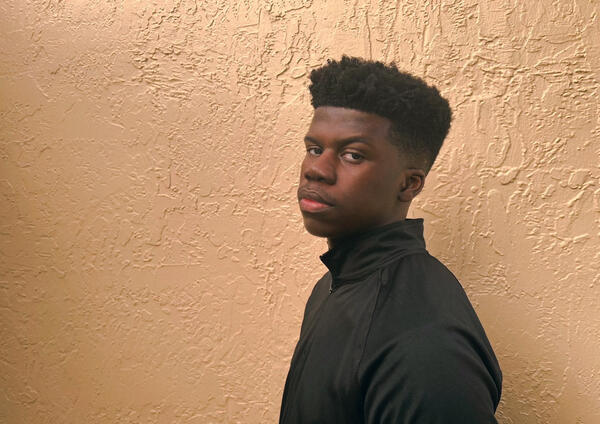
Micah Dawanyi
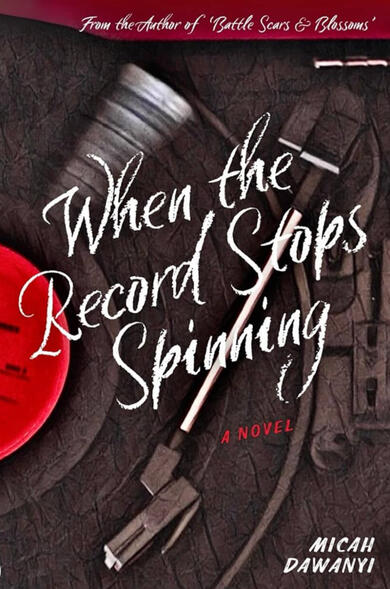
The Minerva Press had the pleasure of interviewing author Micah Dawanyi, the brilliant voice behind When the Record Stops Spinning. Join us as we delve into his writing, his inspirations, and more. Visit his portfolio here: Micah Dawanyi!
1. You describe your latest book, When the Record Stops Spinning, as your best work to date. What sets this apart from your previous writings, and what do you think is the highlight of the novel?When the Record Stops Spinning stands out because of my approach to the writing process. The novel is much more imaginative than anything I’ve done before. My previous two books were heavily influenced by my own experiences, which I loved. I’m not trying to knock that. But this time, I focused on the themes that resonated with me while also allowing myself to think outside the box. I can genuinely say that I forced myself to pull from the deepest depths of my imagination to serve the story.Regarding the main highlight, I’d lean towards the story's complexity. The themes of music, nostalgia, identity, and heartbreak are woven together as the story follows the two leads, Kairo and Sahara. Even the way their lives intersect, as they complement and contrast each other, adds to the complexity of the story. I think it’s one of those stories where there’s “something for everyone.”2. When the Record Stops Spinning’s protagonist Kairo grapples with feelings of hopelessness and uncertainty following a tragedy that changes his world. Although the novel is science fiction, how do his emotions connect with the real world and the reactions that often accompany loss?When you meet Kairo, some time has passed since the tragic event that changed his life. You meet a character who is completely consumed by his despair and is grieving the loss of who he once was. He becomes very fixated on the past, and that happens in the real world all the time. It’s easier to look backward when we’re going through seasons of life that feel unbearable. In those seasons, we can’t even comprehend the idea of moving forward or trying to pick ourselves up again. Sometimes we even use the past as a form of escapism, wishing desperately to return to “the good days.” And that’s okay- we’re only human. That’s why I don’t shy away from those emotional nuances in the story; I embrace them.3. When the Record Stops Spinning follows a reality where time travel through music is possible. How has music played an important role in your life?To me, experiencing music is one of the greatest parts of being alive. Music is literally just organized sound, but it connects on a psychological and even spiritual level. I’ve always recognized that. I’ve always felt that. I couldn’t even count how many times I’ve found myself completely lost in a melody. With the right song, it’s almost like I can transport myself to another place, which is why I wanted to explore time travel and music in a story. There was tons of room to build on my own experiences with music and add in different sci-fi elements.4. What is the message you want readers to take away from When the Record Stops Spinning?Life is laced with both tragedy and wonder, and both help us see the beauty of our existence.5. Let’s travel back in time like Kairo. What inspired you to first begin writing?I had a language arts teacher in elementary school, Ms. Potter, who really planted a seed in me. There wasn’t a specific moment where everything clicked; it was more just the passion she had for literature. That passion was infectious, even as a child. I still think of her classroom sometimes, and how much fun I had learning how to draft narratives and weave sentences together.6. Your novels highlight people of color and touch on subjects such as racial injustice and generational trauma. How have your identity and experiences guided your writing, and how may these topics intersect?My identity and experiences have shown me different ways to use my art as a form of activism. Sometimes it is more direct- i.e., if I’m writing to target misinforma4on and bring light to issues around racial justixe. In other cases, the simple act of giving characters who look like me their own unique, non-stereotypical storylines can be just as revolutionary. But the desire to use my writing responsibly definitely stems from who I am and what I’ve seen in the world.As I’ve developed as a storyteller, I’ve also realized that the human experience is all about connectivity. These complex social topics are not as isolated as one might think. A topic like racial injustice can intersect with generation trauma in thousands of ways. For one, trauma isn’t only physical. There are learned mindsets, behaviors, and even coping mechanisms in communities dealing with racial trauma. These things are so subtle, which makes them easy to pass down through generations. It could be as simple as realizing that you shut down (emotionally) in certain situations because your parents did... and maybe your parents learned to survive that way because of something they experienced.7. You’re very outspoken about mental health and wellness. Why do you think it’s important to have discussions about this?Mental health affects quite literally every aspect of our lives. Once I began to understand that, I was horrified at the fact that we, as a society, avoided talking about such an important topic for so long. I guess part of my outspokenness stems from the fact that we are kind of playing catch-up.8. Your Instagram bio says that you’re “telling stories for a reason.” What is that reason?It definitely shifts depending on the story. But overall, my goal is always to educate, enlighten, and empower with my work.9. You’re a recent graduate of SNHU. How have your experiences in education shaped your writing?SNHU was amazing because my program focused on every aspect of multimedia. I got to work on storyboard panels, graphic designs, short and long-form video content... I even got to write a few commercials! My experiences showed me that the different art-forms all connect. I’ve learned concepts from visual projects, like 2D animation, for example, that have direct applications to literature. It’s really been about learning to pull inspiration and knowledge from anywhere, because there are no limits to creativity.10. At the age of 16, you became the youngest nationally licensed soccer coach in your area. You also began the BiggerThanMe Football Project, which helped underprivileged communities obtain affordable training. How have your athletic pursuits influenced you?My athletic pursuits definitely showed me the importance of community and what it means to have an impact. That could be why I’ve decided to use my writing as a form of advocacy, just as I did in the sports world.I also think my past experiences helped me learn how to thrive in more outgoing social spaces. I consider myself an introvert, but I don’t get super nervous when going into a school book club or presenting information in front of people. Through athletics, I got used to putting myself out there, and that definitely pays off now.11. You’ve been an artist and an advocate from a young age. What words do you have for others who want to go down the same path?Figure out your “why.” It’s going to fuel your desires and the choices you make, both creatifely and intellectually. And when you feel lost, you can use your “why” as a North Star.12. Any plans for the future you’d like to share with us?Sometime around Christmas/the New Year, I’ll be releasing a soundtrack to accompany my latest book! It's a compilation of songs that follow the themes and plot points in When the Record Stops Spinning. For people who like discovering new music, it’s a great point of reference, and readers will enjoy analyzing the context of each song.Other than that, I just want to keep being creative. I’ll definitely write another novel, and now that I’ve written some commercials, screenwriting could also be a possibility.—Don’t forget to check out When the Record Stops Spinning on Amazon!
events

A Bánh Mì for Two Writing Workshop
On June 18, 2024, we welcomed Vietnamese American author Trinity Nguyen to discuss her sapphic young adult romance novel, A Bánh Mì for Two, and hold a writing workshop. Nguyen outlined her writing process, shared writing tips, and discussed the publishing industry.